Thank you.Your donation will help to keep this site working.
Stop deliberate ambient smoke at the source
There is no other way to fix our toxic health problems.
There is no other way to fix our toxic health problems.
Cleanairtas
Landmark decision to protect present and future generations:
Judge Hill in Washington State recognizes Constitutional and Public Trust Rights.
Announces it is the Washington Department of Ecology's Legal Duty to Protect Atmosphere
for Present and Future Generations.
Court Decision:
Surely no child should have to breathe air that could kill them.
put out by the World Health Organisation (WHO)
"Particulate pollution is the most important contaminant in our air...We
know that when levels go up people die." - Joel Schwartz, Harvard School
of Public Health, E Magazine, Sept./Oct. 2002.
"There has got to be an understanding that people who complain about smoke
have a legitimate case, the medical science is on their side now." - Professor
David Bowman, Tasmania. ABC News Feb. 20, 2012. And,
Fire Ecologist & Fire Geographer Prof David Bowman says who cares whether
we achieve fuel management with burning, fuel management can be achieved
with brushcutters or goats - First published on ABC The Drum 13.11.2019.
“...you don’t necessarily get away from air pollution by being further from the
sources” - Helen ApSimon, professor of air pollution studies at Imperial College
London.
e.g. Australia's January 2020 bush fire smoke covered parts of New Zealand.
"Outdoor air pollution a leading environmental cause of cancer deaths." - IARC 17/10/2013.
The specialized cancer agency of the World Health Organization, the International Agency
for Research on Cancer (IARC), announced today that it has classified outdoor air pollution
as carcinogenic to humans (Group 1).
After thoroughly reviewing the latest available scientific literature, world leading experts
convened by the IARC Monographs Programme concluded that there is sufficient evidence
that exposure to outdoor air pollution causes lung cancer (Group 1). They also noted a
positive association with an increased risk of bladder cancer.
Particulate matter, a major component of outdoor air pollution, was evaluated separately
and was also classified as carcinogenic to humans (Group 1).
NOTE: Similar Group 1 carcinogens are asbestos, arsenic, formaldehyde, and mustard gas.
"Tragically only half of "all women diagnosed with lung cancer are alive one year
after diagnosis.
"Lung cancer has a five-year survival rate of just 16 percent" - American Lung Association
"Air pollution is a "silent killer" and is unique in that it affects the entire population"
- Dr. Michael Brauer, professor, school of population and public health, University of
British Columbia.
Wood smoke is primarily made up of particulate matter, i.e. PM2.5 and PM10.
The World Health Organisation's IARC has declared particulate matter as a class 1
carcinogen, just the same as arsenic, asbestos, formaldehyde and mustard gas to name a
few nasties.
Now you wouldn't breathe those in for any duration would you so why are you happy to
breathe deliberate wood smoke from any source?
It is up to you to speak up.
CHILDREN V. CLIMATE CRISIS
COMMUNICATION TO THE COMMITTEE ON THE RIGHTS OF THE CHILD
“The science is incontrovertible: global warming is caused by human activities that emit
carbon dioxide (“CO2”) and other greenhouse gases (“GHG”)2 into the atmosphere of the
planet.3 Each day, the burning of fossil fuels, deforestation, industrial processes, and
agriculture add hundreds of millions of tons of CO2 to the atmosphere, where it will remain
for centuries. There is now more CO2 in the atmosphere than at any time in the past 800,000
years.”
Burning causes a flamable landscape.
The more you burn the more you will have to burn.
Bushfires, wildfires, plannedburns, prescribed fire convert our landscape to be fire
tolerant. It is the fire loving plants that come back first.
Others sometimes never come back!
These fires must be jumped on quickly with sufficient resources to completely put
them out in their infancy .
Exposure to air pollution increases violent crime rates, study finds
The team found strong links between short-term exposure to air pollution and aggressive behaviour.
The team found strong links between short-term exposure to air pollution and aggressive behaviour.
Nearly all the fire on earth has been ignited by humans.
At its core, wildfire is a human problem.
98% of all wildfires are caused by humans - (34Kb download)
At its core, wildfire is a human problem.
98% of all wildfires are caused by humans - (34Kb download)
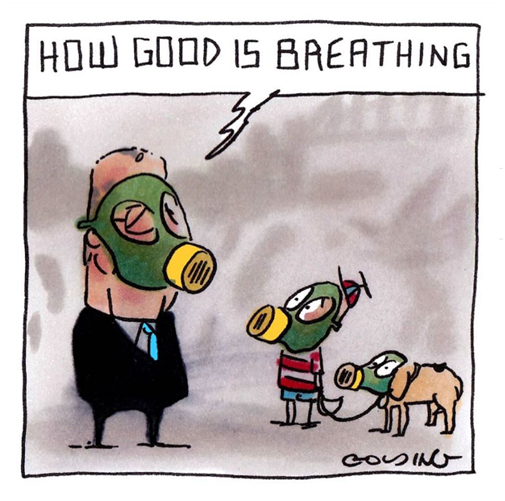
When there is ambient smoke you must look at ways to protect your health.
Wood smoke is primarily made up of particulates, chemical vapours, and gases.
Chemical vapours and gases can come from the wood burning process or for example from chemicals applied to the ground.
Wood smoke is primarily made up of particulates, chemical vapours, and gases.
Chemical vapours and gases can come from the wood burning process or for example from chemicals applied to the ground.

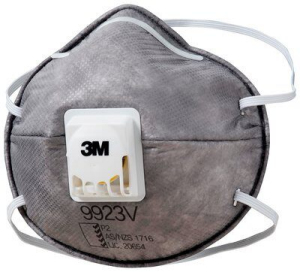
NOTE: The P2 3M-8210 or 3M-8110s 'pandemic' filters being handed out from the Government National Medical stockpile (for influenza) do not have a carbon filter. They are not for use on the fire ground or where bushfire smoke contains the usual chemical vapours or gases.
NOTE – Where there is a hazard of both gas/vapours and particulates, both types of filters must be used.
Surgical masks will not stop smoke. See the demo...
NOTE – Where there is a hazard of both gas/vapours and particulates, both types of filters must be used.
Surgical masks will not stop smoke. See the demo...
3M 9923V respirator
or the
3M 6075 A1 Form
for bushfire smoke
or the
3M 6075 A1 Form
for bushfire smoke
Where ever you are in the world you need clean air to breathe.
When you can't breathe nothing else matters.
When you can't breathe nothing else matters.
P2 or N95 Particulate filters on their own will not remove gases, chemicals or Volatile Organic Compounds (VOCs). And,
Activated-carbon filters on their own will not remove fine particulates.
This is why the respirator you use for bushfire smoke should have both a carbon filter for the gases and a P2 filter for the particulates.
3M recommends their 9923V model for bushfire smoke.
Activated-carbon filters on their own will not remove fine particulates.
This is why the respirator you use for bushfire smoke should have both a carbon filter for the gases and a P2 filter for the particulates.
3M recommends their 9923V model for bushfire smoke.
Disclaimer: People reading health related information on cleanairtas.com should work out what is best for them and act accordingly.
BEWARE: Not all P2 respirators are the same!
Not all masks are suitable for smoke &
Not all masks give protection against viruses
Not all masks are suitable for smoke &
Not all masks give protection against viruses
Coronavirus
Go HERE to read important information about COVID-19
or continue on to read all about the harm of wood smoke.
Go HERE to read important information about COVID-19
or continue on to read all about the harm of wood smoke.
Click on the graphic to see the latest map.
Cleanairtas acknowledges the Tasmanian Aboriginal people as the traditional custodians of Tasmaniia
RESPIRATOR MASK STANDARDS
N95 (United States NIOSH-42CFR84), FFP2 (Europe EN 149-2001),
KN95 (China GB2626-2006),
P2 (Australia/New Zealand AS/NZA 1716:2012),
Korea 1st class (Korea KMOEL - 2017-64)
DS2 (Japan JMHLW-Notification 214, 2018), PFF2 (ABNT/NBR 13.698-2011 – Brazil)
N95 (United States NIOSH-42CFR84), FFP2 (Europe EN 149-2001),
KN95 (China GB2626-2006),
P2 (Australia/New Zealand AS/NZA 1716:2012),
Korea 1st class (Korea KMOEL - 2017-64)
DS2 (Japan JMHLW-Notification 214, 2018), PFF2 (ABNT/NBR 13.698-2011 – Brazil)
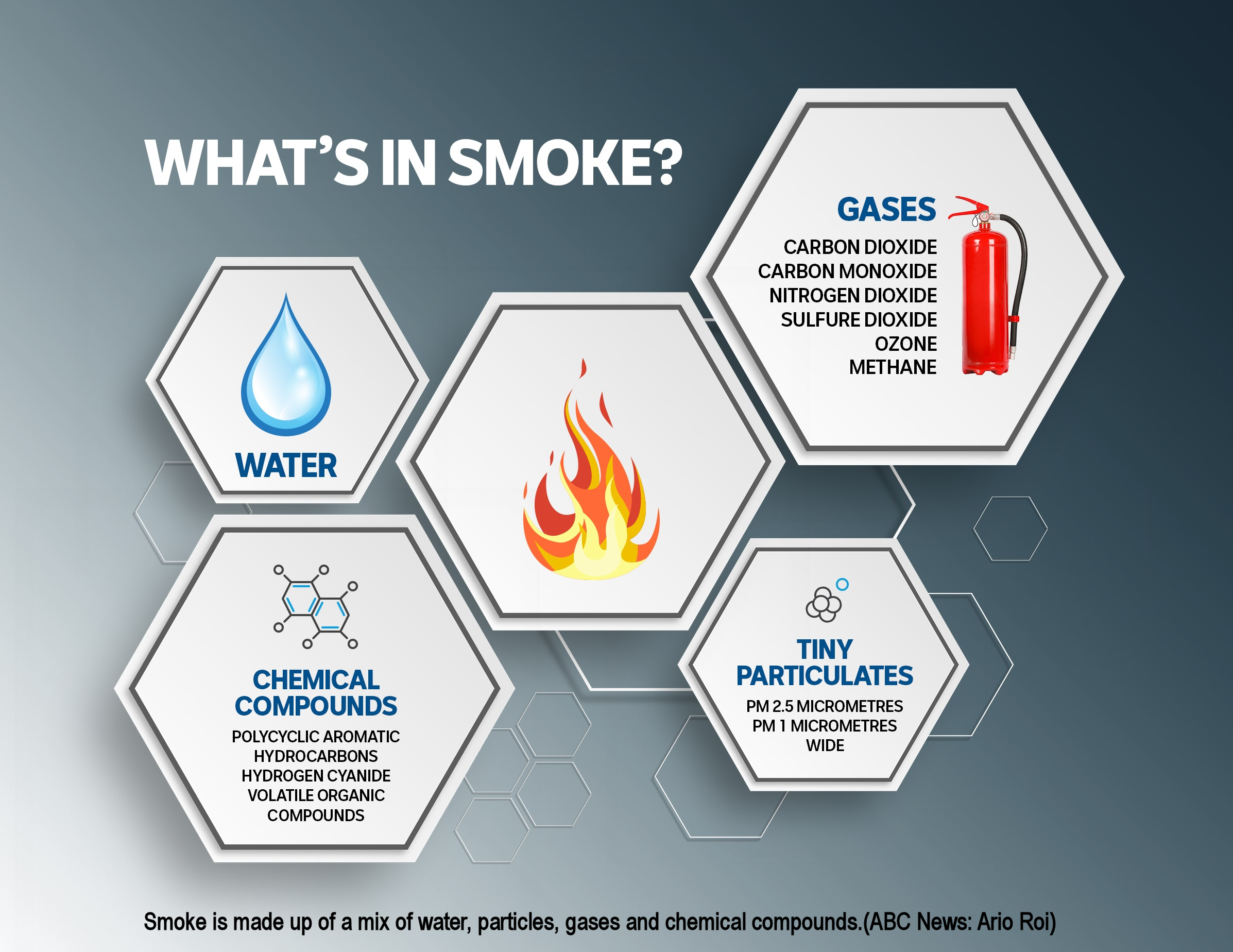
What's in Smoke
This is what you breathe. It goes into your lungs, crosses over into your blood stream and travels to every organ in your body. Particulate matter is a Group 1 (the highest) carcinogen, just the same as asbestos, arsenic, formaldehyde, and mustard gas to name a few other nasties.
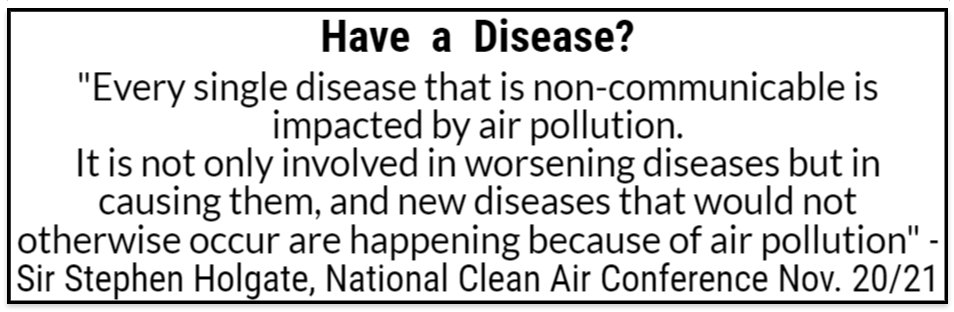
‘Every single disease that is non-communicable is impacted by air pollution. It is not only involved in worsening diseases but in causing them, and new diseases, that wouldn’t otherwise occur are happening because of air pollution.’ - Sir Stephen Holgate, Professor of Immunopharmacology and a respiratory physician
This is what you breathe. It goes into your lungs, crosses over into your blood stream and travels to every organ in your body. Particulate matter is a Group 1 (the highest) carcinogen, just the same as asbestos, arsenic, formaldehyde, and mustard gas to name a few other nasties.
‘Every single disease that is non-communicable is impacted by air pollution. It is not only involved in worsening diseases but in causing them, and new diseases, that wouldn’t otherwise occur are happening because of air pollution.’ - Sir Stephen Holgate, Professor of Immunopharmacology and a respiratory physician
email: cleanair@cleanairtas.com
Tasmania puts forestry before health
"Never, never be afraid to do what's right, especially if the well-being of a person or animal is at stake. Society's punishments are small compared to the wounds we inflict on our soul when we look the other way." - Martin Luther King, Jr.
This site is designed to work on a desktop computer

Indoor and outdoor air quality Click on the logo
Understanding air pollution and your lung health
Air pollution can affect everyone’s health. Outdoor air pollution is linked to health impacts and no level of air pollution is safe to breathe. Lung Foundation Australia is committed to working for clean air to support and protect lung health for all Australians.
Understanding air pollution and your lung health
Air pollution can affect everyone’s health. Outdoor air pollution is linked to health impacts and no level of air pollution is safe to breathe. Lung Foundation Australia is committed to working for clean air to support and protect lung health for all Australians.
Pyromania is a disease.
Treat the few with pyromania and most of these other diseases won't be a problem.
Treat the few with pyromania and most of these other diseases won't be a problem.
Unfortunately, there are some groups and others involved in research that want the smoke to continue to benefit their own personal gain. Selfish abuse of academic entitlement.
Cleanairtas is not affiliated in anyway with My Air Quality Australia (MAQA)